
How to Choose the Right Custom Web Development Company for Your Business



Choosing the right custom web development company is one of the most important decisions a business can make when planning a new website, web application, customer portal, ecommerce platform, or digital product.
A website is no longer just an online brochure. For many businesses, it supports lead generation, sales, customer communication, booking systems, ecommerce, internal workflows, marketing campaigns, analytics, and long-term brand trust.
This is why choosing a development partner should not be based only on price or design samples. The right company should understand your business goals, technical requirements, user experience, SEO structure, performance needs, security, and future scalability.
In this guide, we will explain what a custom web development company does, how to choose the right one, what questions to ask, what mistakes to avoid, and how much a custom web application typically costs.
What Does a Custom Web Development Company Do?
A custom web development company builds websites, web applications, ecommerce platforms, portals, dashboards, and digital systems based on the specific needs of a business.
Unlike basic template-based website builders, custom development focuses on creating a solution around your business model, audience, workflows, content structure, branding, and conversion goals.
A professional custom web development company may help with:
- Custom website design and development
- WordPress website development
- Custom web application development
- Ecommerce website development
- Landing page development
- Website redesign and optimization
- CRM, payment, booking, and automation integrations
- Technical SEO structure
- Performance optimization
- Website maintenance and ongoing support
If your business needs a website that is built around growth instead of a generic template, you can explore our website development services for small businesses.
Why Choosing the Right Web Development Partner Matters
A weak development partner can create more problems than solutions. Poor planning, messy code, slow loading pages, weak mobile responsiveness, plugin conflicts, poor security, and unclear communication can all hurt your business after launch.
The right development company should help you avoid these problems by planning the project properly from the start.
| Wrong Development Partner | Right Development Partner |
|---|---|
| Focuses only on making the website look nice | Builds around design, performance, SEO, and business goals |
| Uses the same layout for every client | Creates a structure based on your audience and services |
| Adds too many unnecessary plugins | Keeps the website lean, scalable, and easier to maintain |
| Does not explain technical decisions | Communicates clearly throughout the project |
| Disappears after launch | Provides support, fixes, and improvement guidance |
Start With Your Business Goals Before Hiring
Before you hire a custom web development company, you should be clear about what you want the website or web application to achieve.
Many businesses start by saying, “We need a new website.” But that is too broad. A stronger starting point is to define what the website should actually do for your business.
- Do you want more leads?
- Do you want more online sales?
- Do you need a booking system?
- Do you need a customer portal?
- Do you need ecommerce features?
- Do you need a multilingual website?
- Do you need better SEO structure?
- Do you need to improve website speed?
- Do you need to replace an outdated website?
Clear goals help the development company recommend the right structure, platform, features, and budget.
Check Their Experience With Similar Projects
A custom web development company does not need to have worked in your exact industry, but it should have experience solving similar types of problems.
For example, if you need a B2B service website, look for experience with lead-generation pages, service page structure, conversion-focused layouts, contact forms, trust sections, and SEO-friendly content architecture.
If you need an ecommerce website, look for experience with product pages, checkout flow, payment gateways, inventory structure, order management, and scalable category pages.
| Your Project Type | Experience to Look For |
|---|---|
| Business website | Service pages, lead forms, responsive design, SEO structure |
| eCommerce website | Product structure, checkout optimization, payment integrations |
| Custom web application | User roles, dashboards, databases, workflows, security |
| Website redesign | UX improvement, content restructuring, speed optimization |
| Agency partnership | White-label delivery, communication, deadlines, quality control |
Review Their Design and Development Process
A reliable custom web development company should have a clear process. If the process is unclear, the project can easily become delayed, disorganized, or more expensive than expected.
A professional process usually includes discovery, planning, design, development, testing, launch, and support.
Discovery
The team should understand your goals, audience, competitors, content needs, technical requirements, and business model before starting the design.
Planning
This includes sitemap planning, page structure, required features, user journeys, integrations, and technical recommendations.
Design
The design should not only look good. It should guide visitors clearly, build trust, and make important actions easy.
Development
The development stage turns the approved design into a working website or application using clean, responsive, and scalable code.
Testing
Testing should cover mobile responsiveness, browser compatibility, forms, speed, links, security basics, and user experience.
Launch and Support
A good company should also help with launch, backups, tracking setup, redirects if needed, and post-launch fixes.
Look Beyond the Cheapest Price
Price matters, but choosing the cheapest company can become expensive later if the website is poorly built.
A low-cost project may look attractive at the beginning, but problems often appear after launch. These problems can include slow pages, broken layouts, poor SEO structure, weak security, plugin conflicts, and difficulty making future changes.
A better approach is to compare value, not just price.
| What to Compare | Why It Matters |
|---|---|
| Project scope | Makes sure you know exactly what is included |
| Design quality | Affects brand trust and user experience |
| Technical quality | Affects performance, security, and scalability |
| SEO structure | Helps your website support long-term organic visibility |
| Support | Helps you fix issues and improve the website after launch |
Make Sure They Understand SEO and Performance
A website can look impressive but still perform poorly if it is slow, difficult to crawl, or structured badly.
A strong development company should understand basic technical SEO and performance principles. This includes proper heading structure, clean URLs, internal linking, mobile-friendly layouts, fast loading, optimized images, and crawlable pages.
Google provides an official SEO Starter Guide that explains important search-friendly website basics for site owners.
Website performance also matters because users expect pages to load quickly and work smoothly. Google’s Core Web Vitals are useful performance and user experience signals to understand when planning a serious business website.
Do Not Ignore Security and Maintenance
Security should not be treated as an afterthought. A business website may collect leads, process payments, store user data, connect to third-party tools, or manage customer accounts.
A reliable custom web development company should follow basic security practices, keep platforms updated, avoid unnecessary plugins, use trusted tools, and recommend proper backup and maintenance routines.
For custom web applications, security becomes even more important because applications may include login systems, user roles, databases, file uploads, admin dashboards, and private customer data.
The OWASP Top 10 is a useful industry resource that highlights common web application security risks.
Ask About Ownership and Future Flexibility
Before hiring a custom web development company, ask who owns the website, code, content, design files, hosting access, domain access, and admin accounts after the project is completed.
Your business should not be locked into a setup where you cannot make updates, change hosting, access your website files, or continue development with another team if needed.
You should also ask how easy it will be to add new pages, update content, create landing pages, add integrations, or expand the website later.
How Much Does a Custom Web Application Typically Cost?
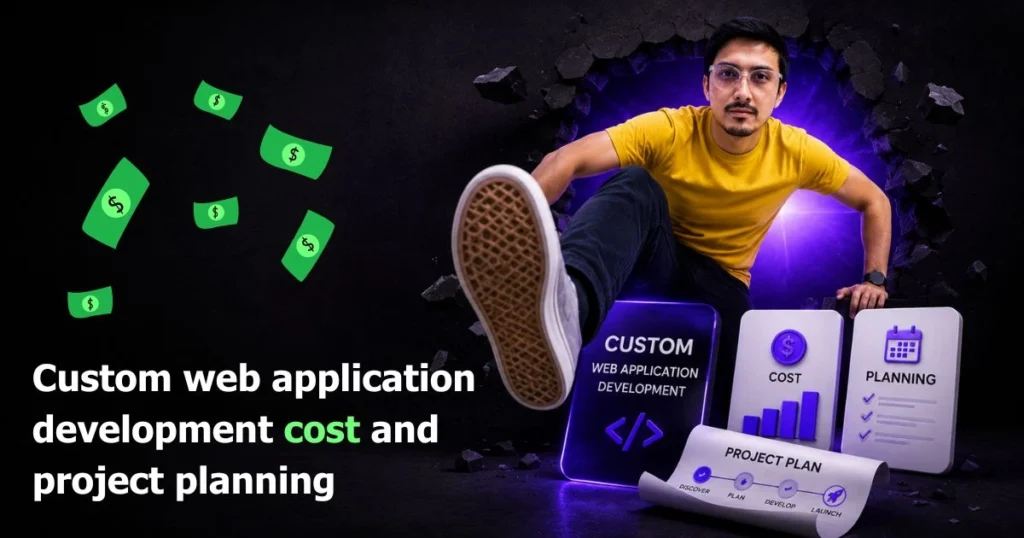
The cost of a custom web application depends on the size, complexity, features, design depth, integrations, user roles, security needs, and development team involved.
A simple custom web application may cost less if it includes only basic features, a small admin panel, simple forms, and limited user functionality. A larger application with dashboards, payment systems, custom workflows, APIs, automations, reporting, and multiple user roles will cost significantly more.
| Project Type | Typical Cost Range | Example Features |
|---|---|---|
| Basic custom web app | $10,000 to $30,000+ | Simple dashboard, forms, admin panel, basic database functionality |
| Small to mid-level web app | $30,000 to $80,000+ | User accounts, role-based access, custom workflows, integrations |
| Advanced business platform | $80,000 to $180,000+ | Complex dashboards, payment systems, APIs, automation, reporting |
| Enterprise-level web application | $200,000+ | High-scale architecture, advanced security, multiple systems, custom infrastructure |
These are general market ranges, not fixed prices. A proper quote requires a clear scope, feature list, user flow, design requirements, technology stack, timeline, and support expectations.
If your project is still early, the best starting point is usually a discovery phase or MVP plan. This helps define the must-have features before investing in full application development.
Questions to Ask Before Hiring a Custom Web Development Company
Before you make a decision, ask direct questions. The answers will help you understand whether the company is organized, experienced, and suitable for your project.
- Have you built similar websites or applications before?
- What platform or technology stack do you recommend and why?
- What is included in the project scope?
- Will the website be mobile responsive?
- Will the website be SEO-friendly?
- How do you handle speed optimization?
- How do you test the website before launch?
- Who owns the website after completion?
- Do you provide post-launch support?
- How do you handle future updates and improvements?
Red Flags to Watch Out For
Not every web development company is the right fit. Some warning signs should make you careful before moving forward.
| Red Flag | Why It Is a Problem |
|---|---|
| No clear process | The project may become disorganized and delayed |
| Very vague pricing | You may face unexpected costs later |
| No discussion about goals | The website may look nice but fail commercially |
| No SEO or performance planning | The website may struggle with visibility and user experience |
| No post-launch support | You may be left alone when issues appear |
Why GBCodies Can Be the Right Development Partner
GBCodies helps businesses build custom websites, WordPress websites, ecommerce platforms, and web solutions that are designed around business goals instead of generic templates.
Our approach focuses on clean design, responsive layouts, conversion-focused sections, SEO-friendly structure, performance-minded development, and scalable website systems.
Whether you need a new business website, a redesign, a custom WordPress website, or an ecommerce solution, our team can help you plan and develop a website that supports your next stage of growth.
You may also find these related guides useful:
- Why Growing Businesses Choose Custom WordPress Development Over Templates
- Website Redesign Services
- Affordable Web Development Services for Small Businesses
- Custom eCommerce Development Services for Scalable Growth
Final Thoughts
Choosing the right custom web development company is not only about finding someone who can build a website. It is about finding a partner who understands your business goals, users, technical needs, and long-term growth plans.
The right company should help you build a website or application that is easy to use, easy to manage, search-friendly, scalable, and designed to support real business outcomes.
If your business is ready to move beyond a generic website and build something more flexible, strategic, and growth-focused, working with a custom web development company can be a smart investment.
FAQs About Choosing a Custom Web Development Company
What is a custom web development company?
A custom web development company builds websites, web applications, ecommerce platforms, portals, and digital systems based on the specific goals and technical needs of a business.
How do I choose the right custom web development company?
Choose a company with a clear process, relevant experience, strong communication, good design quality, technical knowledge, SEO awareness, performance understanding, and post-launch support.
How much does a custom web application typically cost?
A custom web application can cost anywhere from around $10,000 for a simple tool to $200,000 or more for a complex business platform. The final cost depends on features, user roles, integrations, design, security, and development complexity.
Is custom web development better than using a template?
Custom web development is usually better for businesses that need unique design, custom functionality, better scalability, stronger performance control, and a website built around specific business goals. Templates can still work for simple websites and small budgets.
What should be included in a web development project?
A professional web development project should include planning, design, development, responsive testing, basic SEO setup, performance checks, launch support, and clear documentation or training where needed.